Pillars 03 & 06

Safety, healing & community partnership

Crime prevention and community safety cannot succeed through enforcement alone. Sustainable safety requires collaboration, early intervention, social support and transparent policing practices — built on four pillars, supported by evidence-based budgeting and intersectoral coordination.

Pillar 1 · Crime & safety

Transparency and accountability in policing

Effective policing requires trust. Trust is built through transparency, early intervention and clear accountability systems. This pillar ensures that policing is professional, accountable and aligned with community needs.

Key commitments

  • Early-intervention measures to identify behavioural risks among officers before they escalate
  • Identification of truant or misaligned behaviours, followed by structured corrective programmes
  • Structured coaching and mentoring programmes with defined timeframes for officers who require support
  • Performance management for officers who fail to meet behavioural or professional standards
  • Community immersion for new recruits — a practical programme familiarising officers with the communities they serve, local cultures and community expectations

Why it matters

Policing that is professional, accountable and aligned with community needs is the foundation of public trust. Without transparency and early intervention, small behavioural failures escalate into crises of legitimacy.

Accountability systems must be clear, structured and enforceable — supporting officers who need support, and managing out those who fail to meet professional standards.

Pillar 2

Decriminalising poverty and addressing social drivers of crime

Many issues currently treated as criminal matters are fundamentally social and economic problems. Homelessness, mental health challenges, substance-use disorders and trauma require care, not punishment. Safety is achieved by addressing root causes, not by punishing poverty.

Referral, not criminalisation

Closer collaboration between Metro Police and Social Development, ensuring that vulnerable individuals are referred to support services rather than criminalised.

Mass trauma-response programme

A programme led jointly by Social Development and the City, addressing the psychological harm caused by gang violence on the Cape Flats and broader society.

Specialised holding venues

Establishment of specialised holding venues for individuals experiencing homelessness and mental health crises.

Safe homes

Create safe homes for women and children experiencing abuse.

Rehabilitation centres

Rehabilitation centres for drug and alcohol abuse to be established in each community.

Pillar 3

Community representation and partnership

Communities are central to safety. Policing must be rooted in partnership, shared responsibility and community legitimacy — safety is co-produced with communities, not imposed on them.

Key commitments

  • Strengthening and capacitating Neighbourhood Watches as formal partners in community safety
  • Direct partnership between law enforcement and Neighbourhood Watches, with dedicated teams to deal with extortion and other crimes
  • Law enforcement that is intelligence-driven
  • Law enforcement present when Neighbourhood Watches patrol the communities
  • Safety guarantees, training and protective measures for community volunteers who support crime-prevention efforts
  • Community structures have a direct voice in local safety planning and oversight
“Safety is co-produced with communities, not imposed on them.” — Crime & Safety Manifesto, Pillar 3

A diverse and representative workforce

Safety improves when officers can communicate effectively with the communities they serve and reflect the diversity of Cape Town. This pillar strengthens trust, communication and legitimacy.

  • Metro Police deployments sufficiently diverse, enabling communication across languages, cultures and community contexts
  • Recruitment strategies that prioritise local representation, cultural competence and community familiarity

Evidence-based budgeting & intersectoral collaboration

The Safety and Security budget must not be used solely for enforcement. It must also fund empirical studies into the root causes of crime and support interdepartmental collaboration.

  • A portion of the Safety and Security budget allocated to research on the root causes of crime — poverty, unemployment, trauma, substance abuse and spatial inequality
  • An intersectoral collaboration framework between Safety and Security, Social Development, Health, Education and community organisations
  • Research findings used to guide policy, resource allocation and prevention strategies
“Crime cannot be reduced through policing alone. It requires a whole-of-society approach that addresses trauma, poverty, exclusion and the social conditions that allow crime to flourish.” — Our Promise, Crime & Safety Manifesto
Pillar 06 · Women & youth

Healing, protection and empowerment

Cape Town cannot speak about youth and women empowerment without speaking honestly about the environment in which many of our people are trying to survive. A child who grows up hearing gunshots, losing friends to gangs, witnessing violence or living with constant fear cannot be expected simply to “work harder”. A traumatised generation needs more than speeches — it needs opportunity, protection, healing and hope.

TraumaSafetySkillsOpportunityEconomic independence

1.1 A city that heals

Community-based trauma and psychosocial programmes for:

  • Children exposed to gang violence and shootings
  • Women and families affected by violence
  • Victims and witnesses of violent crime
  • Young people at risk of gang recruitment
  • Schools in high-risk communities

Delivered with professional services, NGOs, faith-based organisations, schools and community organisations — bringing support into the communities where people live, rather than expecting traumatised families to navigate complicated systems on their own.

1.2 Keeping young people out of gangs

We will compete and fight the gang economy by creating a legitimate economy of opportunity. Our municipality will:

  • Expand youth sports, arts, culture and recreation programmes
  • Support after-school and holiday programmes in high-risk communities
  • Create mentorship programmes connecting young people with positive adult role models
  • Partner with businesses to provide apprenticeships, internships and first-job opportunities
  • Support youth enterprises and cooperatives
  • Identify young people at risk of dropping out and connect them to education, skills and employment pathways

The objective is not simply to tell a young person, “Don't join a gang.” It is to give them a credible alternative.

1.3 Women's safety and economic independence

Women must be empowered to become economically independent and safe. We will:

  • Increase access to municipal procurement for qualifying women-owned businesses
  • Support women entrepreneurs with business development and market access
  • Develop skills programmes linked directly to employment
  • Improve lighting, public spaces and safer routes around transport and community facilities
  • Support community-based programmes for women affected by violence and trauma
  • Strengthen partnerships supporting women and children experiencing violence

1.4 Turning municipal spending into opportunity

Municipal procurement must become an instrument of empowerment. Where legally permissible, we will structure appropriate contracts and supplier-development programmes so that women and young entrepreneurs can participate in the municipal economy.

We will not measure empowerment by how many people attend a workshop. We will measure it by how many people obtain employment, start sustainable businesses, win contracts, acquire skills and build independent livelihoods.
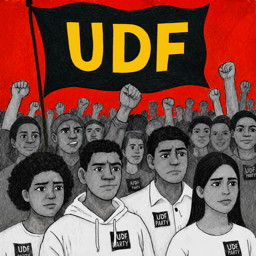
“We want a Cape Town where a young person from Retreat, Steenberg, Lavender Hill, Lotus River, Parkwood, Manenberg, Hanover Park, Khayelitsha, Delft, Mitchells Plain, Philippi or any other community can see a future beyond the circumstances into which they were born.” — A Different Future for Cape Town's Youth